Portfolio Project

Compliance Management System: Mobile-First Field Extension

A Unified UX Research, Interaction Design & Product-Led Growth (Adoption) Case Study
Product Discovery UX Research Interaction Design PLG Framework Offline-First Design Product Analytics Enterprise System
Role Platform Domain Year
UX Designer & Product Analyst iPad & iPhone (iOS) B2B Enterprise Compliance System 2021

Introduction

This case study documents the end-to-end redesign of a legacy enterprise compliance management system for field-based users. The platform was mature and well-adopted on desktop, used by compliance managers, administrators, and office-based assessors. However, field users conducting on-site inspections, audits, and assessments at remote locations and live facilities had no way to use the system directly in the field. Without a portable, field-ready interface, assessors were forced into a two-step workaround: making notes outside the system on-site, then returning to a desktop to manually enter or update the assessment record. This broke the workflow at its most critical point, the moment of observation, and introduced delays, transcription errors, and compliance risk.

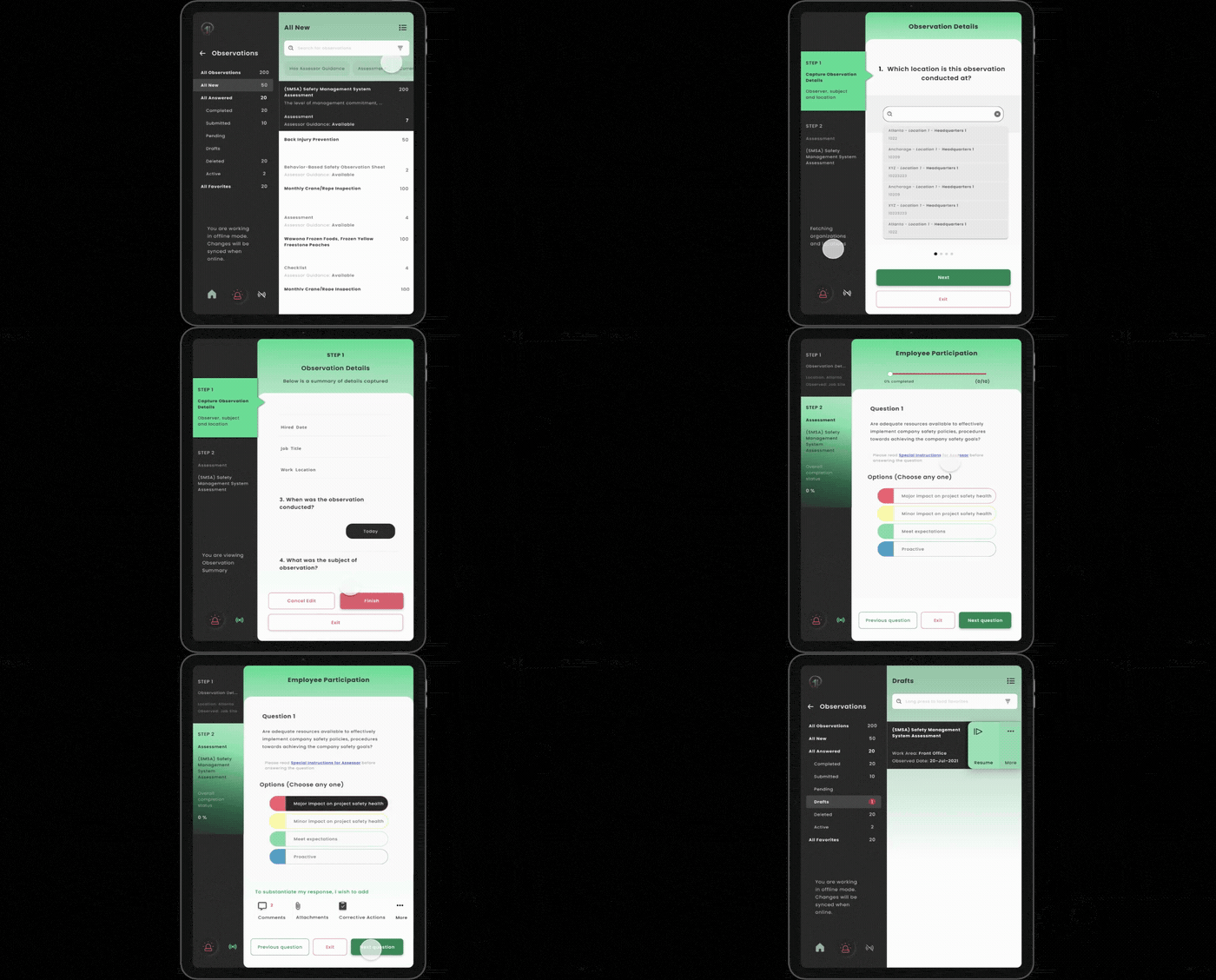
The strategic response was a purpose-built field-native features that field assessors could carry into any environment and use to fill in assessment forms directly and offline, without needing to revert to pen and paper or defer data entry to a later desktop session. The offline-first architecture, draft save, and auto-sync features were not enhancements, they were the core enablers that made direct field use viable. This case study examines that project through two interlocking lenses:

UX Research & Design Lens Diagnosing user pain, mapping journeys, designing for the field context, and validating through usability testing, the human-centred story of how field assessors were failing and how the redesign addressed that.
Product-Led Growth (PLG) Lens Translating every UX decision into measurable product metrics, activation rate, time-to-value, feature adoption, and sustained engagement, demonstrating how UX work directly drives growth outcomes in an enterprise SaaS context.

The approach flow is Research → Product metrics → Activation funnel → UX → Growth outcomes

Prototype

Skills used

UX Research & Design
User Research (interviews, field observation)
Persona Development
Empathy Mapping
Customer Journey Mapping (As-Is & To-Be)
Workshop Facilitation
Wireframing
Interaction Design
Prototyping
Usability Testing (SUS scoring)
Product Thinking
Product Discovery
Feature Prioritisation
Roadmap Planning
PLG (Product-Led Growth) Framework
Activation & Funnel Analysis
Feature Adoption Analysis
Retention Modelling

Problem Statement

The Core Access Failure

Field assessors were conducting compliance inspections at remote sites, live facilities, and outdoor environments where a laptop or desktop was neither available nor practical. The compliance system had only a basic mobile interface, which produced a structural problem: the moment of assessment, when evidence was fresh, context was visible, and accuracy was highest, was exactly when the system could not be used, forcing assessors into a two-step workaround, making notes outside the system on-site, then returning to a desktop to enter the data. The solution was to extend the system across multiple touchpoints, desktop, iPad, and mobile, with a seamless experience that allowed assessors to fill forms, work offline, and sync data without any break in workflow.

Two Costly Workarounds Emerged

Paper-Based Workaround Assessors took handwritten notes on-site and manually re-entered data at the desktop later. This introduced transcription errors, duplicated effort, and created compliance gaps between the moment of observation and the point of record.
Deferred Completion Assessors waited until returning to a fixed location to complete digital records, hours or days after the site visit. Observations faded, context was lost, and time-sensitive incidents were flagged late.

The Product-Level Symptom: Broken Activation

From a product analytics perspective, these workarounds showed up as a catastrophic activation failure. When the iOS extension was first introduced (pre-redesign), field users were assigned licences but rarely completed assessments through the app. The system had a field access problem, but it also had a product completion problem.

Desktop Completion Rate 82%, the baseline for a well-functioning system
iPad Pre-Redesign Completion Rate 21%, 4× below desktop baseline
Primary Abandonment Point Draft save and offline sync, the exact moments the field workflow required most

Problem Statement Summary

Field-based compliance assessors were unable to complete assessments at the point of inspection because the existing iOS interface was very basic and did not support offline capture, reliable draft save, or seamless sync, resulting in a 61-percentage-point gap in completion rate compared to desktop users, and creating compliance risk, data quality issues, and licence underutilisation for enterprise clients.

Research & Discovery Methodology

The research phase combined qualitative field investigation with quantitative funnel analysis. This dual approach was deliberate: qualitative methods revealed why assessors were failing; quantitative analysis revealed where and how severely. Together they built the complete picture needed to design a credible, evidence-driven solution.

Research Methods

Stakeholder Discovery Workshops Facilitated sessions with compliance managers, field assessors, and system administrators. Used feedback grids (Works Well / Needs to Change / Questions / Ideas) to surface competing priorities and hidden assumptions.
Field Observation & User Interviews On-site observation of assessors at work, watching how notes were taken, how the app was (or wasn't) used, and where confidence broke down. Interviews followed each observation to understand the emotional and cognitive experience.
User Personas & Empathy Mapping Synthesised research into a primary persona (Adam, Field & Survey Officer) with empathy maps capturing what he does, thinks, feels, and needs at each stage of the assessment workflow.
Customer Journey Mapping (As-Is) Mapped the current-state journey step-by-step, from travelling to a site through to post-submission, documenting actions, thoughts, feelings, and needs at each stage. Surfaced the emotional low points (anxiety, confusion, frustration) that corresponded to interface failures.
Activation Funnel Analysis Analysed the 6-stage digital funnel from iPad licence assignment through to full assessment submission. Identified the funnel stage where drop-off was most severe (draft save / sync) and quantified the gap between desktop and iPad completion rates.
System Usability Scale (SUS) Conducted SUS evaluations on both the desktop and the pre-redesign iPad interface. The desktop scored 76 (Good). The iPad pre-redesign scored 49 (Not Acceptable), a quantified confirmation of the usability gap.

📊 Stakeholder Feedback Grid

✅ Works Well ⚠️ Needs to Change ❓ Questions 💡 New Ideas
On-field recording is easy and fast
Manual work eliminated
Templates auto-load based on location
Critical incident notifications visible
Frequent auto-saving
App performance is slow
Notifications are unintuitive
Syncing is confusing
How does communication work for non-iOS?
What are the offline data limits?
SMS/iMessage-based incident alerts
Gesture-based navigation
Voice-based search and incident recording
Dashboard with recent activities
Centralized notifications tab

👤 Persona – Adam (Field & Survey Officer)

👤 Empathy Map – Adam (Field & Survey Officer)

Stakeholder Assumptions and Risk Mapping

AssumptionRisk LevelValidation Approach
Users prefer mobile recordingHighField interviews, analytics
SMS/iMessage is the best alert methodMediumSurvey, usage data
Offline sync is technically feasibleHighDev partner consultation
Templates are reused across locationsMediumContextual inquiry
Users are tech-savvy and need minimal trainingLowPersona analysis

As-Is Customer Journey: The Failing Field Experience

StepDoesThinksFeelsNeeds
Travel to site, take notesUses pen & paper"Hope I don't lose these notes."Anxious, cautiousMobile recording, auto-save
Choose templateSearches manually"Which one fits this site?"Confused, uncertainSmart template suggestions
Fill out basic detailsEnters manually"This takes too long."FrustratedAutofill from location or history
Answer questionnaireScrolls through long forms"I might miss something important."OverwhelmedSimplified UI, criticality alerts
Continue laterSaves and exits"Will this sync correctly?"WorriedReliable offline sync, confirmation

Key Friction Points from Field Research

PLG Framework Application

Product-Led Growth is typically associated with freemium SaaS and self-serve models. Its core logic, however, applies directly to enterprise product extensions: the product must deliver value fast enough and reliably enough to drive sustained engagement, without relying on sales or support to carry users to the aha moment.

Mapping PLG Concepts to This Project

Activation (Aha Moment) A field user completes their first full assessment on iPad and submits it, experiencing the system working at the point of inspection for the first time.
Time-to-Value How quickly a newly iPad-enabled assessor submits their first completed assessment. Pre-redesign: ~62 minutes with high abandonment. Post-redesign target: ~28 minutes.
Retention Sustained assessment submission rate over 30–90 days, not logins or time-in-app, but actual compliance output.
Feature Adoption Uptake of offline mode, draft save, and auto-sync, the three features that make field use viable and directly enable the aha moment.
Expansion Signal (PQL) Accounts where 3+ assessments are completed via iPad in the first 14 days, including at least one via the offline path, a strong signal for additional field licence expansion.
Churn Risk Indicator Accounts with high iPad licence assignment but low completion rate, flagged as renewal risk requiring customer success intervention.

The Aha Moment: Two Valid Completion Paths

Unlike a simple SaaS activation, the aha moment in this system has two equally valid routes, both result in a fully submitted assessment and both count as activation:

Path 1: Single Session A field user completes their first full assessment on iPad and submits it, experiencing the system working at the point of inspection for the first time.
Path 2: Draft → Offline → Sync → Submit User starts assessment → saves to draft (auto or manual) → completes offline → draft auto-syncs on reconnect → user reviews and submits. Typical for complex, multi-location assessments. Pre-redesign: effectively broken. Post-redesign: a primary viable route.

The redesign's primary success condition was making Path 2 as reliable as Path 1, because for the most demanding field assessments, Path 2 is the only realistic option.

PLG Translation: UX Work as Growth Interventions

Every phase of UX research and design work maps directly to a PLG metric. This is not just a usability project, it is a growth intervention:

Identified desktop inaccessibility through field research Activation blocker analysis, root cause of near-zero field completion rate. This is the PLG equivalent of mapping funnel drop-off to a specific product failure.
Designed offline-first assessment capture with draft save Removed the single biggest barrier to Path 2 completion, the core aha moment enabler. Without this, activation cannot improve.
Built auto-sync with visible status indicator Reduced abandonment anxiety, the sync state indicator directly addresses the emotional barrier (fear of data loss) that caused mid-assessment dropout.
Simplified iPad UI with field-only feature set Reduced time-to-value, assessors reach the submission screen faster with fewer navigation steps.
SUS scoring before and after redesign Quantified UX improvement as a proxy for activation probability, connects interface quality to a measurable growth output.
Designed contextual first-use onboarding tooltips Feature discovery acceleration, ensured offline mode and draft save were adopted early rather than discovered weeks later.

Design Solution: Offline-First, Field-Native

Design principle: The iPad interface must work reliably in the worst-case field scenario, no connectivity, one hand occupied, gloves possible, time pressure real. Everything else follows from that constraint.

From As-Is to To-Be: The Redesigned Journey

StageDoesThinksFeelsGains
Travel to siteOpens app, auto-loads template"This is fast and accurate."Confident, focusedLocation-based template suggestions
Fill out detailsAutofill from GPS and history"I'm saving so much time."RelievedSmart autofill, reduced manual entry
Record assessmentUses offline mode with auto-save"No worries about data loss."Secure, efficientOffline recording, auto-save
View alertsReceives SMS/iMessage notifications"I can act immediately."EmpoweredReal-time criticality alerts
Submit & syncSyncs automatically when online"Everything's backed up."SatisfiedSeamless sync, confirmation feedback

Before & After: Key Design Changes

❌ No offline mode, data lost on disconnection✅ Offline-first architecture: assessments work fully without any connectivity
❌ Manual, hidden draft save ✅ Auto-save every 60 seconds + persistent draft recovery on relaunch
❌ Opaque sync, no user feedback✅ Sync status bar: Saved Offline → Syncing… → Submitted, visible at all times
❌ Desktop navigation (5+ taps to reach assessment)✅ Flat field navigation, assessment launch in 2 taps from home screen
❌ Small touch targets, desktop form controls ✅ iOS-native controls, large tap targets, optimised for gloved/one-hand use
❌ No photo or note capture within the flow✅ In-context photo attachment and quick notes embedded within each assessment field
❌ No onboarding for new iPad users✅ Contextual first-use tooltips on offline mode, draft save, and sync

Feature Prioritisation: Phased Delivery

To guide the redesign, we developed a staged capability roadmap grounded in field research and user feedback. This roadmap prioritized progressive empowerment for assessors—from basic mobile access to advanced interaction modes.

📌 Short-Term Enhancements

🚀 Long-Term Vision

This phased approach ensured that each release delivered meaningful value while laying the foundation for intuitive, high-impact experiences.

Stakeholder Map

Users Hopes and Fears

Analytics: Activation Funnel & Completion Analysis

The 6-Stage Activation Funnel

The funnel begins at iPad licence assignment, existing enterprise users being extended to a new platform, not new sign-ups. The drop-off pattern reveals where the field extension failed before the redesign:

Funnel Stage Desktop iPad Pre iPad Post (Proj) Interpretation
iPad Licence Assigned 500 (100%) 300 (100%) 300 (100%) Baseline, existing users given iPad access
First iPad Login 480 (96%) 228 (76%) 261 (87%) iPad drop hints at device unfamiliarity
Assessment Opened on iPad 450 (90%) 150 (50%) 225 (75%) Half of iPad users couldn't navigate to an assessment
Field Data Entered (any) 430 (86%) 108 (36%) 198 (66%) Most couldn't enter data effectively on iPad
Draft Saved or Submitted 415 (83%) 78 (26%) 177 (59%) Draft save broken pre-redesign; most abandoned
Assessment Fully Submitted ★ 410 (82%) 63 (21%) 165 (55%) Aha Moment, 4× gap pre-redesign; projected to close significantly

Completion Path Breakdown

Completion Path Desktop iPad Pre-Redesign iPad Post-Redesign (Proj)
Single Session Complete 82% 21% 55%
Draft → Sync → Submit 10% 5% 38%
Abandoned 8% 74% 7%

PLG Insight: The post-redesign projection shows a deliberate shift, the draft→sync→submit path grows from 5% to 38% of completions. The feature that drives activation is offline mode, not UI polish.

Feature Adoption (Post-Launch, 8 Weeks)

Feature Week 1 Week 4 Week 8 PLG Role
Offline Mode 41% 68% 83% Aha Moment Core
Auto-Sync on Reconnect 38% 72% 88% Aha Moment Core
Draft Save & Resume 45% 74% 86% Aha Moment Core
Photo Attachment 22% 44% 61% Secondary
Quick Notes 18% 38% 54% Secondary
Offline Map 12% 28% 41% Secondary

Impact & Projected Outcomes

21% → 55%
Assessment Completion Rate (iPad)
62 → 28 mins
Time to First Submission
49 → 81
SUS Score (iPad Interface)
17% → 64%
90-Day Sustained Submission Rate

Full Impact Summary

Metric Before (iPad Pre) Projected After Basis
Assessment Completion Rate (iPad) 21% 55% Funnel recovery from friction removal and offline-path reliability
Draft→Sync→Submit Path Usage 5% 38% of completions Offline workflow now functional, Path 2 becomes a primary route
Time to First Submission ~62 minutes ~28 minutes Step count 9→4 for Path 1; offline removes reconnection wait time
SUS Score (iPad interface) 49, Poor 81, Excellent Post-redesign usability testing estimate vs 68-point threshold
90-Day Sustained Submission Rate 17% ~64% Activation-retention correlation; benchmarked from Amplitude PLG data
Field Licence Utilisation ~21% ~55% Direct mirror of completion rate, licences used vs assigned

✏️ Design Process

Wireframes (Balsamiq)

High-Fidelity UI

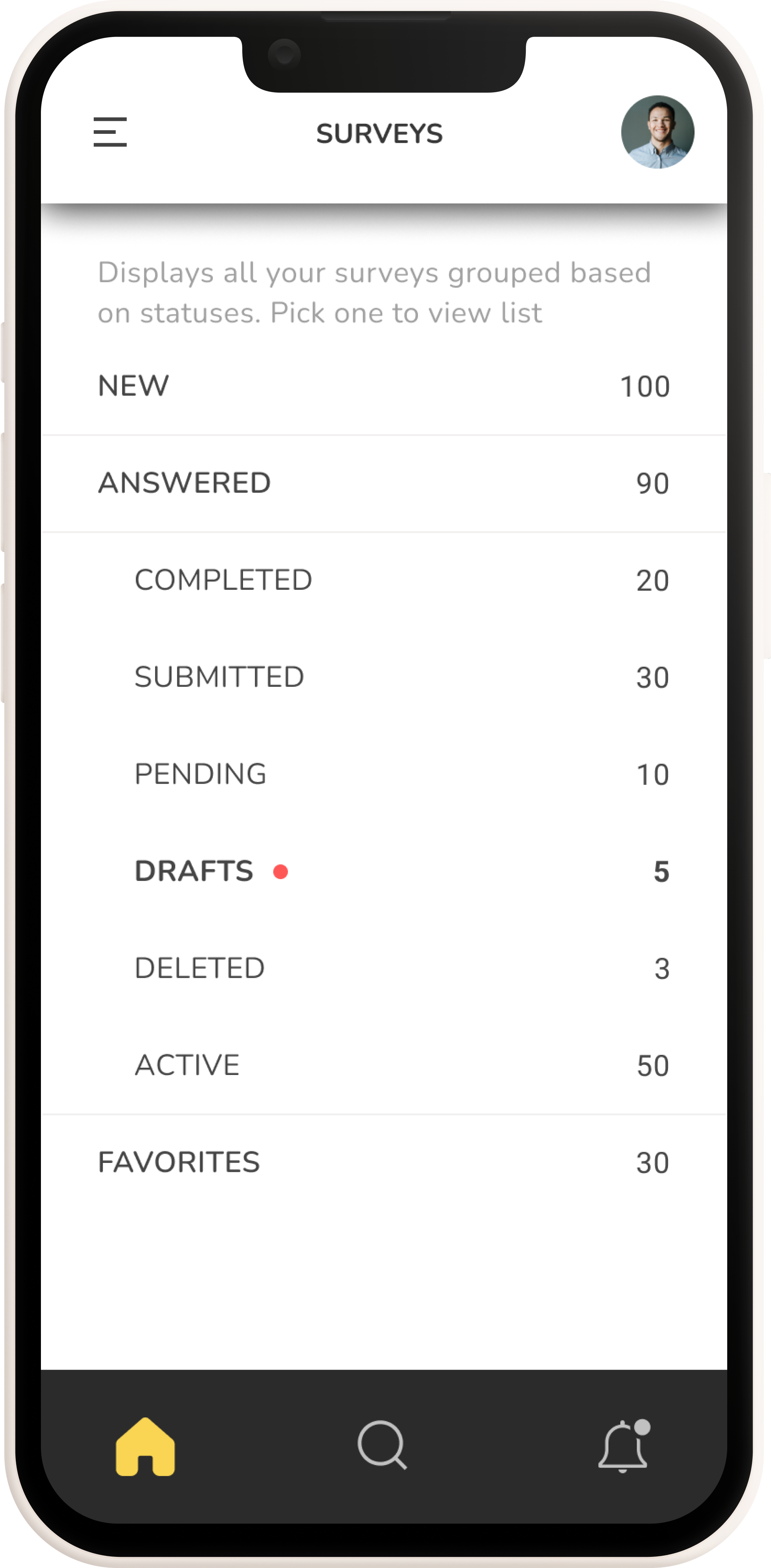
Mobile UI 1 Mobile UI 2 Mobile UI 3

Strategic PLG Recommendations

Instrument Offline Workflows Specifically

Standard analytics cannot capture offline behaviour at the time of occurrence. Implementing a local event queue that timestamps and stores events offline, syncing them with the server on reconnect, gives the product team full visibility into the offline assessment journey, including where offline users drop off.

Define the Product Qualified Lead (PQL) for Enterprise Expansion

Field assessors who complete 3+ assessments via iPad in their first 14 days, including at least one via the offline path, are strong signals for licence expansion. These accounts should be flagged in the CRM for account manager outreach, not to sell, but to identify whether additional field assessors in the organisation would benefit from iPad access.

Surface Draft Recovery Prominently on Relaunch

The most anxiety-inducing moment for field users is returning to the app after a connectivity loss. The relaunch screen should proactively surface any pending drafts: "You have 1 assessment saved offline, ready to sync." This single intervention can meaningfully reduce abandonment at the sync stage.

Use Completion Rate as the North Star Metric

In enterprise SaaS, renewal conversations are won or lost on demonstrated usage value. Assessment completion rate, not logins, not time-in-app, maps directly to compliance outcomes and licence justification. It should be the primary metric in customer success dashboards and QBR decks.